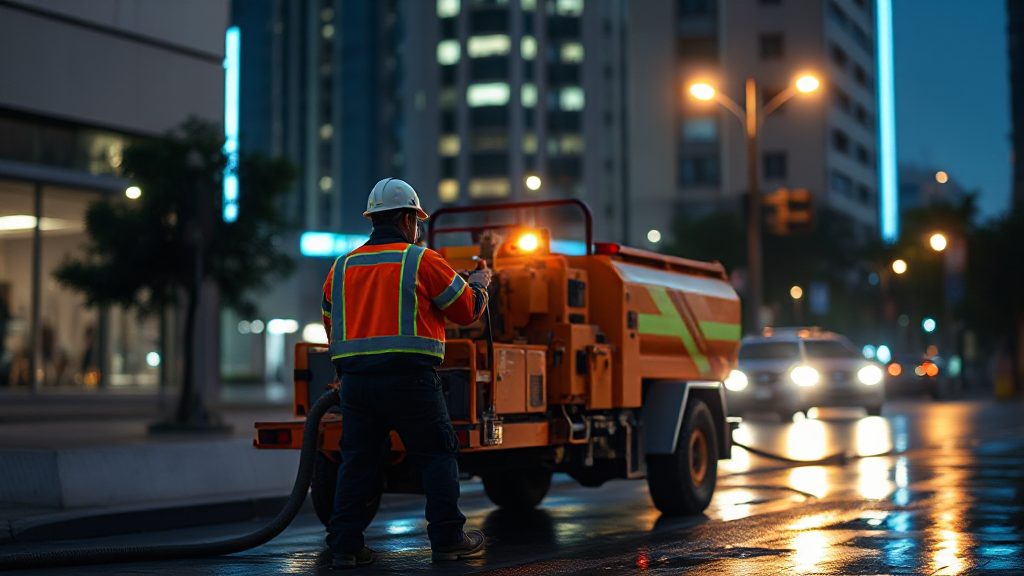
One Evening to Verify a Desentupidora Praça da Sé: What I Learned
By the end of this account, you will know exactly what to check before you let a drainage crew into your building near the Sé Cathedral. I spent one evening testing how a desentupidora Praça da Sé operation actually behaves when a real blockage hits a busy historic address, and the lessons came in the order the events happened.
The short answer to the search intent is this: in Praça da Sé you are not just buying a drain-cleaning job, you are buying a response that respects old plumbing, narrow access streets, mixed residential-commercial buildings and the fact that many properties here share aged clay or cast-iron lines. Trust is built on verification, not on a van with a phone number.
Why the Praça da Sé Address Changes the Job
The square sits in the historic core of São Paulo, and that geography matters more than most people expect. Buildings around the cathedral and the surrounding streets often date from decades ago, with internal stacks that were never designed for today’s volume of use. A crew that treats every call like a new condominium in the south zone will misread the problem.
Access is the second factor. Service vehicles cannot always park at the door, so a technician may need to run hoses or a hydro-jetting line from a distance. That extra setup time is normal, but an operator should tell you about it before starting, not after the meter has been running.
Third, the mix of uses is intense. Ground-floor shops, upper-floor apartments, snack bars, and offices can all feed into the same branch line. When one sink backs up, the cause may sit two floors away or in a shared shaft. A proper diagnostic walk-through of the whole line is the first real test of competence.
What Happened When I Called for a Blocked Line
I arranged a test call for a small commercial unit with a slow-draining floor drain and a faint smell near the service area. The first thing I noted was the phone response: a clear question about the address, the type of blockage, and whether water was rising or just draining slowly. That triage matters because a simple clog and a backed-up sewer main need different equipment.
The technician arrived in uniform and, before touching anything, asked to see the drain, the cleanout access and the nearest inspection box. He explained that he would try mechanical clearing first and only move to hydro-jetting if the line showed grease or root intrusion. That sequence is reassuring because aggressive equipment on fragile old pipes can cause damage.
He also quoted a range before starting and confirmed what would change the price, such as needing to open a floor or work after hours. No surprise fees appeared later. If you are comparing providers, ask for that same pre-job explanation in plain language.
Safety Checks I Watched For and You Should Too
A drainage job is also a hygiene and safety job, especially in a busy area like this. The crew should wear gloves and eye protection, keep the work area contained, and disinfect surfaces after clearing waste. I watched for those basics and they were present.
Here is the checklist I would apply to any crew before letting them start:
- Identification and a written or messaged quote before work begins.
- Confirmation of which line is blocked and where the access point is.
- Explanation of the method: auger, hydro-jetting, or vacuum truck.
- Protection of floors, walls and nearby stock in commercial units.
- A clear statement of what is not included, such as opening walls or replacing pipes.
If a technician cannot tell you which of these applies, that is your signal to pause. Safety and transparency travel together in this trade.
Methods You Will See and When Each One Fits
Not every blockage needs the same tool, and a good operator will match the method to the diagnosis. Mechanical augers are common for simple clogs in smaller branch lines. Hydro-jetting uses high-pressure water to scour grease, scale and roots from larger pipes. Vacuum trucks remove solids from inspection boxes and septic systems.
| Method | Best for | Watch out for |
|---|---|---|
| Mechanical auger | Simple clogs in branch lines | Can scratch fragile old pipes if forced |
| Hydro-jetting | Grease, scale and root intrusion | Needs correct pressure for pipe condition |
| Vacuum truck | Solids, inspection boxes, septic tanks | Access and parking space required |
In the historic centre, I would ask specifically whether the technician has worked with older cast-iron or clay lines. The answer tells you whether they will adapt pressure and tooling or just push harder.
Costs, Timing and the Questions That Save Money
Pricing for a desentupidora Praça da Sé São Paulo SP call usually depends on the access difficulty, the time of day, the length of the line and whether a truck is needed. Emergency and night calls cost more, and that is fair as long as it is stated upfront.
The money-saving questions are simple. Ask whether a camera inspection is included or extra. Ask whether the price covers clearing the blockage only or also cleaning the surrounding line. Ask what happens if the blockage returns within a short period. A provider that answers these without irritation is usually the one that will not disappear after payment.
Timing also matters in this neighbourhood. Peak hours around the square can slow a crew’s arrival, so a realistic estimate is better than an optimistic one. I would rather hear forty minutes and get a call at thirty-five than hear ten minutes and wait an hour with water rising.
Red Flags I Would Not Ignore
During my evening of observation, I kept a mental list of warning signs. The first is a quote given without looking at the drain. The second is pressure to approve extra services before the basic diagnosis is done. The third is a technician who cannot explain in plain words what caused the blockage.
Another red flag is a crew that leaves waste or dirty water behind. In a busy commercial area, that is both a health issue and a sign of poor process. Finally, be wary of anyone who promises a permanent fix without inspecting the pipe condition. Old lines in the historic centre often need repair, not just clearing, and honest providers say so.
If you are a building manager, keep a simple record of every call: date, line affected, method used and result. Over time that log tells you whether you have a recurring structural problem or isolated clogs. It also gives you leverage when comparing future quotes.
What I Would Do Differently Next Time
Looking back, the job went well because I asked questions before agreeing. Next time I would go one step further and request a camera inspection on any line that has blocked more than once. I would also photograph the access points in advance so the crew can plan equipment before arriving.
For anyone searching for a desentupidora em Praça da Sé São Paulo SP, the lesson is that verification is the service. Check identification, ask for the diagnosis, confirm the method and the price range, and watch how the crew treats your space. A company that passes those checks is worth keeping on file, because in this part of the city the next blockage is usually a question of when, not if.